
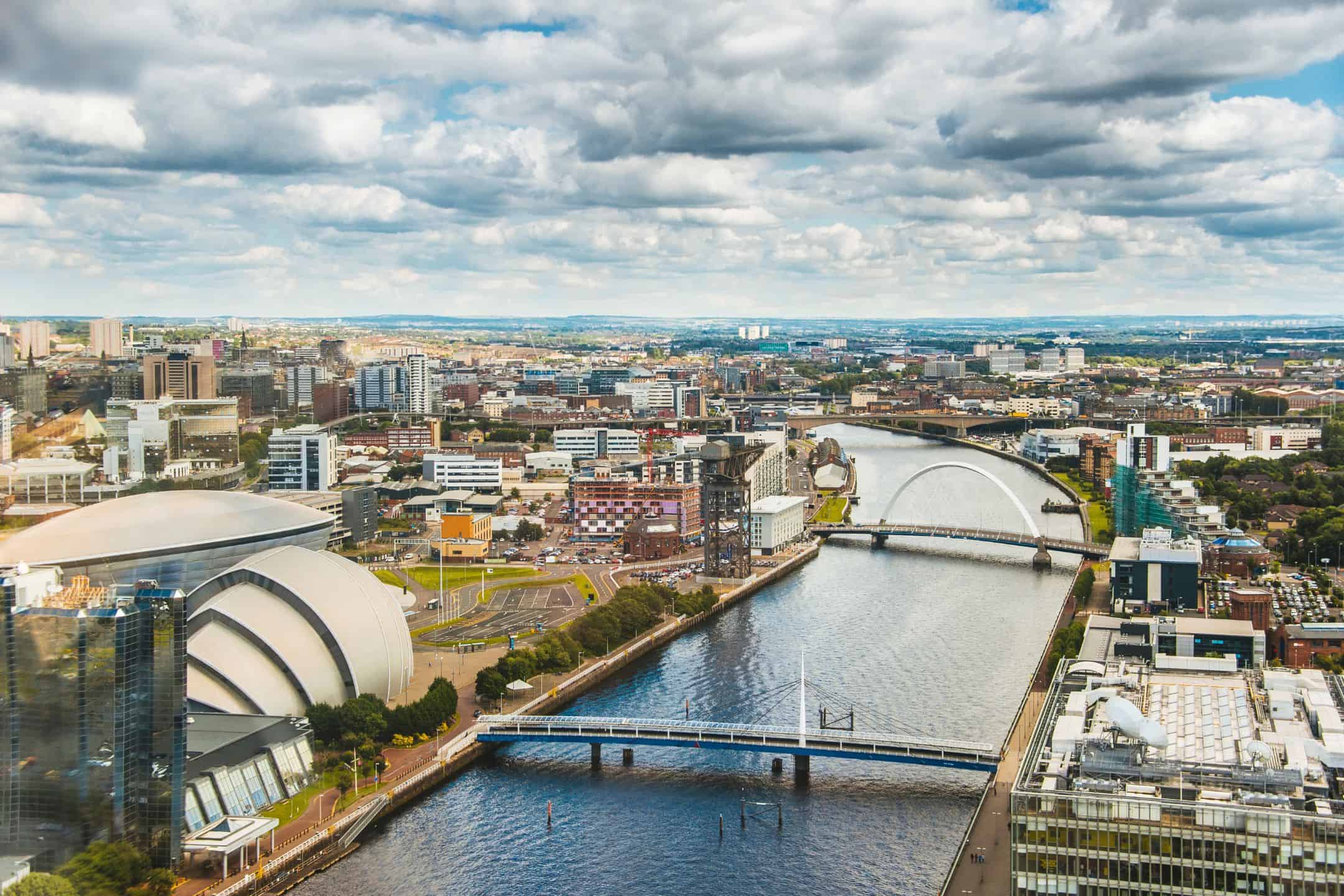
Thinking about moving to Glasgow? You are not alone.
Over the past decade, Glasgow has become one of the most popular relocation destinations in the UK, attracting professionals from London, families from across Scotland and international movers drawn to its culture, affordability and sense of identity.
Is Glasgow a good place to live? In short, yes. It offers a lower cost of living than London and Edinburgh, a strong job market, respected cultural institutions and neighbourhoods with real character. It is a city that feels lived in rather than curated.
Why people are moving to Glasgow
There is rarely a single reason people choose Glasgow. It is usually a combination of affordability, opportunity and lifestyle.
Affordability compared to London and Edinburgh
One of the biggest drivers is cost. Glasgow is significantly more affordable than London and notably cheaper than Edinburgh across property prices and rent.
For many people moving to Glasgow from England, especially from the South East, the ability to buy a substantial period property for the price of a small London flat changes what is possible.
Rent is also lower than in Edinburgh, particularly in areas outside the West End and city centre.
Culture and the arts
Glasgow’s cultural scene runs deep. Kelvingrove Art Gallery and Museum, the Burrell Collection and the Gallery of Modern Art are part of everyday life rather than occasional attractions.
Music shapes the city’s identity. Celtic Connections attracts international performers every January. Smaller venues across Finnieston, the West End and the Southside host emerging artists year-round.
The food scene has grown steadily over the last decade. Finnieston is known for independent restaurants, and the Southside has built one of the most diverse dining scenes in Scotland.
Job market and opportunity
Glasgow’s economy is broad and stable. Key sectors include:
- Financial services
- Creative industries
- Technology and digital
- Higher education
- Healthcare
Large employers are based in the city centre and along the Clyde corridor. There is also a growing start-up presence, particularly in digital and tech.
For many households, relocating to Glasgow means access to strong career prospects without London-level living costs.
Character and community
Glasgow’s reputation for friendliness is well earned. Conversations start easily. Neighbours introduce themselves. There is humour and directness in everyday life.
Football rivalries between Celtic and Rangers are part of the social fabric. You do not need to be involved, but you will quickly become aware of match days and their impact on the city.
Best areas in Glasgow for families
Choosing where to live depends on schooling, budget and the kind of environment you prefer.
Hyndland and Jordanhill
Located in the West End, Hyndland and Jordanhill remain popular with families.
They offer:
- Strong school catchments
- Attractive tree-lined streets
- Reliable rail connections
- Access to parks and green space
Property prices reflect demand, but many families see long-term value in the area.
For a deeper look, see our guide to moving to Glasgow’s West End.
Shawlands and Giffnock
The Southside has become one of the most desirable parts of Glasgow for families.
Shawlands provides:
- Independent shops and cafes
- Frequent trains to Glasgow Central
- Proximity to Queen’s Park
Giffnock, within East Renfrewshire, attracts families prioritising school performance and larger suburban homes.
You can explore this area further in our article on moving to Glasgow’s Southside.
Bearsden and Milngavie
North of the city, Bearsden and Milngavie offer:
- Detached and semi-detached homes
- Strong school reputations
- Easy access to countryside
They feel suburban but remain well connected by rail.
Best areas in Glasgow for young professionals
If restaurants, nightlife and proximity to work matter most, several neighbourhoods stand out.
The West End
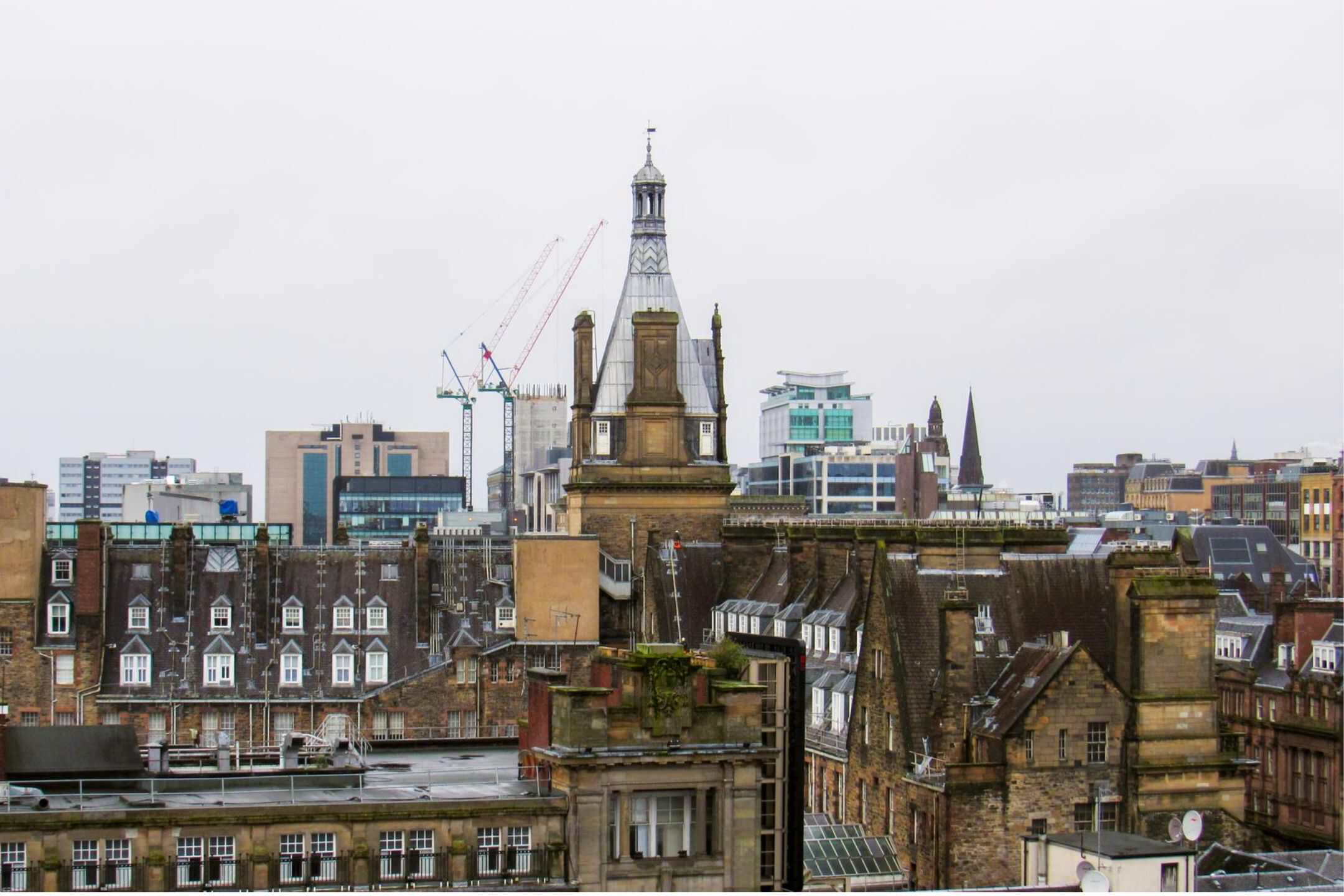
Partick, Kelvinbridge and Finnieston attract young professionals thanks to their walkable streets, strong selection of bars and restaurants and traditional tenement flats. Compared to Edinburgh, similar properties here are generally more affordable.
Merchant City and Broomielaw
For city centre living, Merchant City offers converted warehouses and modern apartments. You are within walking distance of offices, shops and cultural venues.
Shawlands and Queen’s Park
The Southside appeals to those who want a slightly calmer setting without losing quick access to the city. Trains reach Glasgow Central in around 10 minutes.
Cost of living in Glasgow
What does it really cost to live in Glasgow?
Property prices
Average property prices in Glasgow remain significantly lower than London and generally lower than Edinburgh.
In broad terms:
- Far cheaper than London
- More affordable than Edinburgh
- Competitive with Manchester (depending on area)
Tenement flats provide space and character at prices that would be difficult to match in southern England.
Rent levels
Rent for a one-bedroom flat in the city centre is typically lower than Edinburgh and substantially below London.
Outside prime postcodes, rental options are comparatively accessible for a major UK city.
Everyday costs
Transport, groceries and eating out are broadly in line with other UK cities. Independent venues often provide good value.
Overall, Glasgow remains one of the most affordable major cities in the UK when balancing income potential and housing costs.
Glasgow property market
If you are moving to Glasgow from England, the buying process will feel different.
Home Report system
In Scotland, every property for sale must have a Home Report prepared in advance. This includes:
- A single survey
- An energy report
- A property questionnaire
You can review this information before making an offer.
Offers over
Many homes are listed as “offers over”. In competitive areas, final sale prices can exceed the advertised figure.
Understanding this system helps you plan your budget realistically.
Property types
Glasgow offers a wide range of property styles:
- Victorian and Edwardian tenements
- Pre-war semis
- Detached suburban homes
- Modern apartments in the city centre
If you are buying a tenement flat, access and stairwell layout should form part of your moving plan. Our dedicated tenement guide explains what to consider.
Transport in Glasgow
Glasgow’s transport network is practical and well established.
The Subway
The Glasgow Subway, known locally as the Clockwork Orange, is one of the oldest underground systems in the world. It runs in a circular route linking the West End and city centre.
It is compact but efficient and a common feature of daily life.
Rail and bus
Rail connections link suburbs such as Shawlands, Bearsden and Milngavie with the city centre. Edinburgh is around 50 minutes away by train.
Buses operate across the city, though journey times can vary during peak hours.
Airports and road links
Glasgow Airport sits around 20 minutes from the centre by car. Prestwick Airport is accessible by rail.
Major roads connect the city easily to the Central Belt, Highlands and south towards England.

What is Glasgow weather like?
Glasgow receives more rainfall than many English cities. Grey days are common in winter and early spring.
However, summer evenings are long and bright. Parks such as Kelvingrove and Queen’s Park become social hubs when the sun appears.
You quickly adapt to carrying a jacket and umbrella. The weather rarely stops the city functioning.
Planning your move to Glasgow
Once you have chosen your neighbourhood, the practicalities begin.
Book early during peak season
Summer and the end of the school year are busy periods for removals in Glasgow. If you plan to relocate during these months, secure your removal company early.
Consider access carefully
If your new home is a tenement flat, ensure your removal company understands the stairwell layout and parking situation. Glasgow closes vary widely in width and access.
Understand removal costs
Before confirming arrangements, review how much removals cost in Glasgow to plan your budget properly.
Work with a local branch
Glasgow is a large and varied city. A removal company with genuine local knowledge understands the differences between Dennistoun, Hyndland and Giffnock.
When you are ready to organise your relocation, you can book your Glasgow removal through our local branch.
Glasgow vs Edinburgh – which suits you better?
Many people compare the two cities before deciding.
Edinburgh offers striking architecture and a concentrated tourist economy. Glasgow offers scale, lower property prices and a broader range of neighbourhoods.
If you value live music, varied nightlife and more accessible housing costs, Glasgow often proves the stronger choice.
If you prefer a smaller, more formal city with a strong visitor economy, Edinburgh may appeal more.
Your priorities will determine which city fits your lifestyle.
What makes living in Glasgow distinctive
Beyond property prices and transport links, Glasgow has qualities that are harder to measure:
- A strong sense of humour
- Direct conversation
- Pride in neighbourhood identity
- Deep-rooted football culture
- Quick access to countryside
Loch Lomond and the Trossachs are within easy reach. The Ayrshire coast is accessible for day trips. The city feels urban yet closely connected to open landscapes.
Making the decision to move to Glasgow
Relocating to Glasgow is a choice to live in a city that balances affordability with opportunity, and heritage with progress.
You gain access to respected universities, established industries and neighbourhoods that feel individual rather than interchangeable. You adapt to the rain, learn the local expressions and find your regular cafe.
When the time comes to organise your move, planning carefully will make the transition smoother. Arranging a survey, understanding access conditions and confirming timings all help your relocation begin on the right footing.
If you are preparing to relocate, book your Glasgow removal and arrange a tailored survey based on your new address.